BHEL 3 MW Turbine — High Vibration Root-Cause Investigation & Correction
Scope of Work
On-site vibration analysis, rotor-dynamic assessment, root-cause identification, workshop rotor balancing, bearing replacement, and recommissioning.
The Challenge
The 3 MW turbine had been experiencing increasing vibration for 6 months — peaking at 9.2 mm/s on the non-drive-end bearing. Three separate maintenance teams had replaced bearings without resolving the underlying issue.
Our Solution
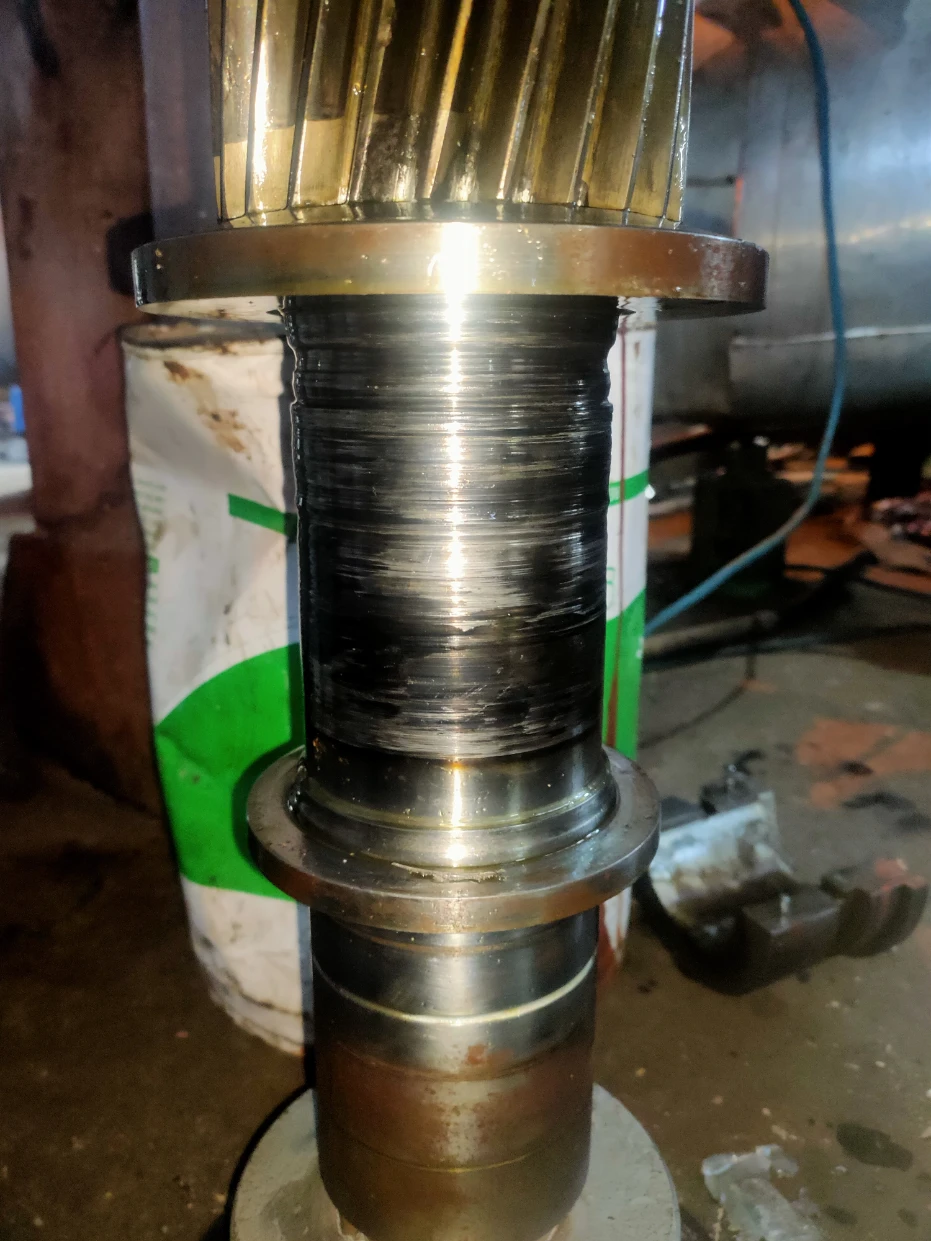
We deployed vibration analysis equipment and captured frequency spectra at all operating speeds. A 1× dominant component persisted through all speeds, confirming rotor mass imbalance rather than bearing or alignment issues. The rotor was removed, journals inspected (light ovality corrected), and balanced to ISO G1.0 in our workshop. Final residual: 4.8 g·mm per plane.
Measured Outcomes
- Vibration reduced from 9.2 mm/s to 0.8 mm/s at operating speed
- Root cause confirmed: rotor mass eccentricity from a previous botched journal repair
- 24+ months operation since recommissioning — no bearing changes
- Full balancing report and vibration spectra provided for insurance file
Have a Similar Requirement?
We handle Troubleshooting jobs across all major OEM brands and industries.
Tell us your turbine make, capacity, and symptoms — we respond with a technical answer, not a brochure.