The Hidden Bearing Killer
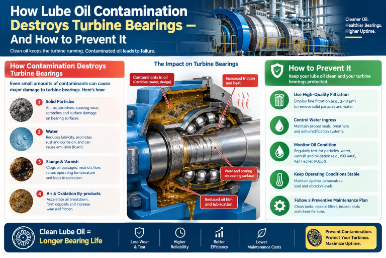
Turbine babbitt bearings are precision components operating on a hydrodynamic oil film just a few microns thick. Any contamination of the lube oil system — solid particles, water, or degraded oil — destroys this film, leading to direct metal contact and accelerated wear. Studies show that over 70% of turbine bearing failures are lubrication-related.
Contamination Type 1: Solid Particles
Particles above 10 microns can scratch bearing surfaces. Particles in the 1–10 micron range are most damaging — they enter the oil film clearance and cause three-body abrasion. Sources include post-construction debris, wear particles from gears, and dirt entering through tank breathers.
Solution: Install high-efficiency lube oil filter elements (ISO 16889, beta-ratio ≥200 at 10 microns) in the main filter housing. Use tank breather filter elements (3 VL glass fibre) to prevent ingestion of airborne particulates. Target system cleanliness: ISO 4406:99 Class 16/14/11 or better for turbine bearings.
Contamination Type 2: Water Ingress
Water in lube oil causes hydrogen embrittlement of babbitt, promotes oxidation, and supports bacterial growth. Even 200 ppm of free water significantly reduces oil film strength. Sources include steam gland leaks, condensation in the tank, and cooler tube failures.
Solution: Install WaterSorp offline filter elements in the side-stream return line. These dual-function elements simultaneously remove solid particles and absorb free and emulsified water. Regular oil sampling (monthly) per ISO standards will detect water early.
Contamination Type 3: Oil Oxidation & Degradation
High operating temperatures and the presence of metal catalysts cause turbine oil to oxidise, forming varnish deposits and acidic by-products. These deposits clog filter elements, stick to bearing surfaces, and accelerate wear.
Solution: Monitor acid number (AN) and viscosity trends. WaterSorp offline filtration extends oil life by removing the water and particles that catalyse oxidation. Plan oil changes before the acid number exceeds OEM limits.
- Check filter differential pressure weekly — replace element at 3.5–4 bar ΔP
- Inspect tank breather filter monthly
- Conduct oil sampling every 30 days and trend results
- Install WaterSorp elements if water contamination is detected
- Flush the system with mobile centrifuge filter after any major repair
We supply ISO 16889-compliant lube oil filter elements compatible with Triveni, Siemens, BHEL, and all major turbine makes. Request a quote via WhatsApp.
WhatsApp Us